OSHA Hoisting and Excavation Safety Requirements Massachusetts
10
Aug
Massachusetts construction sites must manage two overlapping responsibilities: keeping excavation work safe under federal OSHA standards and ensuring hoisting operators meet state licensing requirements. The right training plan addresses both before equipment reaches the trench or jobsite.
Call 508-212-4735 to enroll today.
OSHA hoisting and excavation safety requirements Massachusetts projects should address include competent-person inspections, cave-in protection for most excavations 5 feet or deeper. Safe access and egress, utility-location procedures, and training for the specific machinery being operated. Massachusetts also requires a hoisting machinery license for covered equipment, with classifications based on the type of machine.
These rules are practical controls, not paperwork alone. Employers must ensure operators are properly trained and licensed, while site teams identify changing hazards before work begins. The requirements below explain how excavation protections, inspections, state licensing, and operator training fit together on a Massachusetts project.
What Are the OSHA Hoisting and Excavation Safety Requirements in Massachusetts?
Massachusetts operators must satisfy two connected layers of compliance: state hoisting licensing and federal OSHA job-site safety rules. A license authorizes operation of covered machinery, but it does not replace the employer's responsibility to plan safe work. Provide training, and control hazards around hoisting and excavation activities.
Massachusetts Regulation 230 CMR 6.00 establishes minimum requirements for a hoisting machinery operator's license or temporary permit. The licensing system is organized by the type of machinery an operator will use, so an excavator, crane, and forklift may require different classifications. Before accepting an assignment, confirm that your license covers the equipment and work you are expected to perform. Review the MA hoisting license classifications and verify current requirements through the appropriate Massachusetts authority.
What does the employer have to verify?
The employer must make sure each person operating hoisting equipment has appropriate training and a valid license for the specific machinery class. That duty goes beyond collecting a license card. Employers also need to ensure operators understand the hazards of the particular site, including ground conditions. Nearby workers, utilities, traffic, overhead obstructions, and the limits of the equipment being used. Massachusetts rules place responsibility on employers to ensure excavators and hoisting operators are properly trained and aware of job-site hazards.
How do OSHA rules fit with Massachusetts licensing?
OSHA standards apply in addition to the state license. For hoisting and lifting work, review 29 CFR 1926 Subpart O, which addresses motor vehicles, mechanized equipment, and related construction operations. For trenches and excavations, 29 CFR 1926 Subpart P covers protective systems and excavation safety. In practice, that means a licensed operator still needs to follow the employer's site-specific safety plan, use required protective measures, and stop work when conditions become unsafe.
OSHA requires excavation sites to be inspected daily by a competent person for signs of cave-ins, protective-system failure, hazardous atmospheres, or other dangerous conditions. Federal guidance also generally requires an adequate cave-in protective system for employees in excavations five feet or deeper, unless a recognized exception applies. These requirements work alongside Massachusetts licensing rather than replacing it. The governing OSHA excavation guidance is available from the Occupational Safety and Health Administration.
When Does an Excavation or Trench Need Cave-In Protection?
Before an operator enters or works beside an excavation, the employer and competent person must determine whether the ground can remain stable and what protective measures are required. Under OSHA 1926 Subpart P, employees generally need an adequate protective system in an excavation that is 5 feet deep or more. Unless the excavation is made entirely in stable rock. An excavation under 5 feet still requires evaluation when the competent person sees evidence of a potential cave-in. OSHA excavation guidance identifies the protective-system and inspection rules.
Massachusetts adds a separate permit trigger. Under 520 CMR 14.00. A trench on public or private property that is more than 3 feet below grade generally requires a permit from the local permitting authority before excavation begins. State guidance defines a trench as a narrow excavation whose bottom width is no more than 15 feet. That permit requirement does not replace OSHA protections, so the site plan should address both.
Excavation depth and trench protection checkpoints
| Depth / Situation |
OSHA Requirement |
Notes for MA |
| Less than 5 ft |
A protective system may not be required if the competent person finds no indication of a potential cave-in. The excavation must still be inspected and hazards controlled. |
A trench more than 3 ft below grade may require a Massachusetts trench permit, even when the OSHA 5-foot protective-system threshold has not been reached. |
| 5 ft to 19 ft |
Use an adequate protective system, such as sloping, benching, or a properly designed support or shield system, unless the excavation is entirely in stable rock. |
Confirm the local permit requirement for a qualifying trench and follow the permit conditions. Do not treat a permit as approval to skip OSHA controls. |
| 20 ft or deeper |
The protective system must be designed or approved by a registered professional engineer, as required by OSHA 1926.652. |
Coordinate the engineered design with the project plan and any local permitting requirements before work starts. |
| Egress at 4 ft or deeper |
Provide a stairway, ladder, ramp, or another safe means of egress so workers do not have to travel more than 25 feet laterally to reach it. |
Include safe access in the Massachusetts trench plan and keep it usable as the excavation changes. |
Daily competent-person inspections
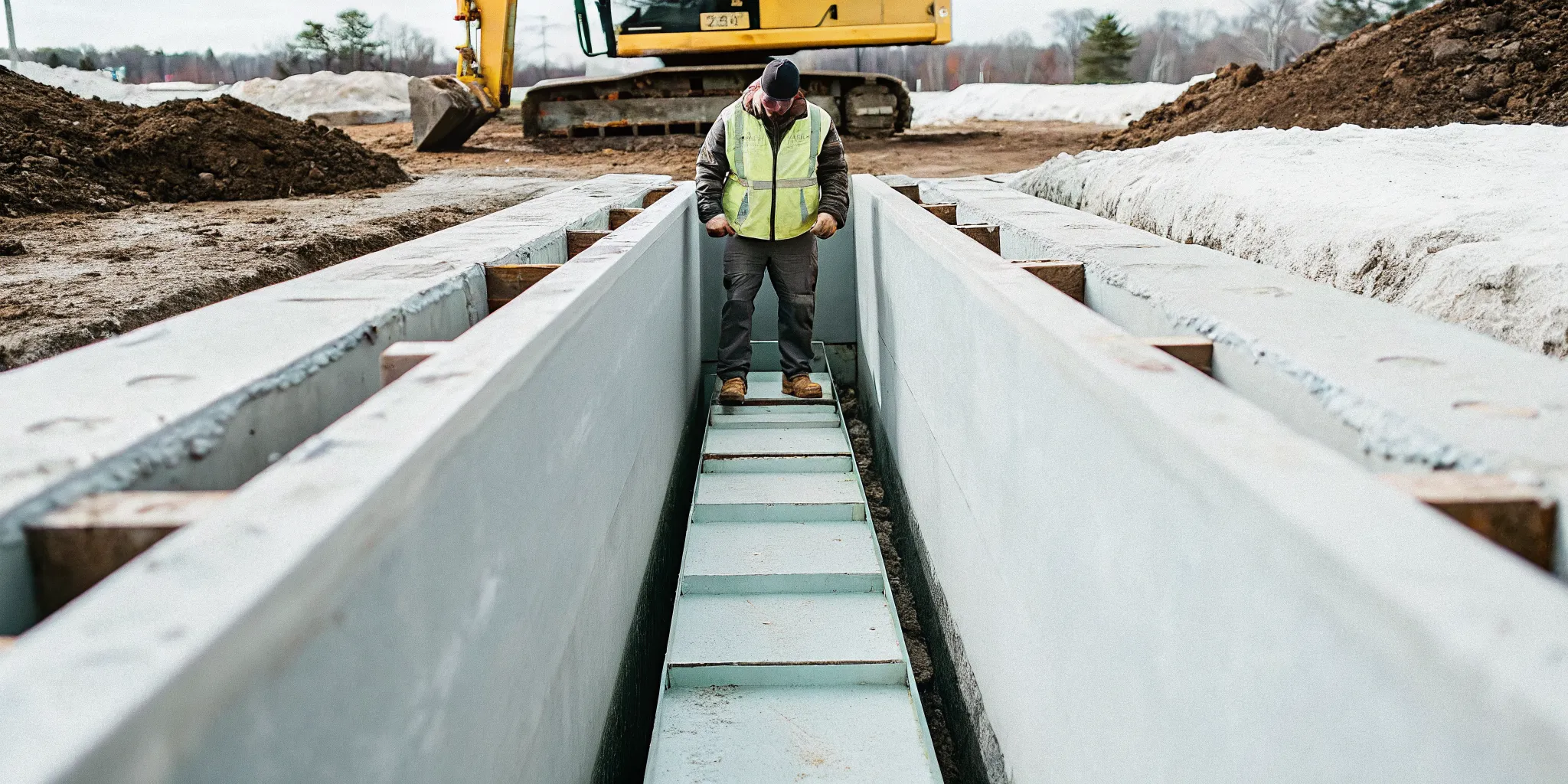
OSHA requires a competent person to inspect the excavation, adjacent areas, and protective systems daily before work begins, and again when conditions change. The inspection should look for cave-in indicators, protective-system failure, hazardous atmospheres, water, nearby loads, and other hazards. If danger is identified, keep workers out until the hazard is corrected or controlled. This disciplined review is a core part of the practical hoisting and excavation safety expectations Massachusetts operators and employers must follow.
How Do OSHA Safety Rules Apply Around Utilities and Power Lines?
Utility strikes and contact with energized lines can turn routine excavation or hoisting into a life-threatening event. Before digging, lifting, or repositioning equipment, the employer and crew should identify underground installations, overhead hazards, and the controls needed for the specific work area. These steps are part of applying OSHA excavation requirements at the job site.
The 24-Hour Utility Locate Rule
OSHA 1926.651(b) addresses situations in which a utility company or owner cannot respond to a request to locate an underground installation within 24 hours. Unless state or local law allows a longer period. It also covers cases where the exact location cannot be established. In that situation, the employer may proceed only with caution and by using detection equipment or another acceptable method to locate the installation.
That exception is not permission to excavate blindly. Pause the work long enough to review available plans, mark the dig area. Brief the operator and spotter, and select equipment and methods that reduce the chance of contact. Use cautious excavation practices as the crew approaches the suspected utility, and stop if field conditions do not match the available information. A locate request, markings, and the employer's controls should be documented according to the project process.
Power Line Clearance: The 10-Foot Rule
Keep equipment, loads, booms, and workers at least 10 feet from overhead power lines or live transmitters. The clearance must be considered throughout the movement, not only when the machine is parked. A raised boom, swinging load, or changing grade can bring a previously safe setup too close to an energized line.
Before work begins, identify the lines from the operator's position and the full path of the load. Establish a clear boundary, use a dedicated spotter when visibility is limited, and lower or reposition equipment before traveling near the hazard. Never rely on the operator's estimate of distance alone. If the required clearance cannot be maintained, stop and have the employer establish an appropriate control plan before continuing. These precautions should be included in the pre-task briefing, especially when excavation and hoisting activities occur in the same work zone.
How Massachusetts Licensing and OSHA Training Work Together
Massachusetts hoisting licensing and OSHA training address different parts of the same job-site responsibility. Under 230 CMR 6.00, an operator must hold the appropriate state license to operate covered hoisting machinery on public or private property. The license classification is tied to the type of machinery, while OSHA training addresses safe operation, hazard recognition, and employer responsibilities. Review the state regulation at 230 CMR 6.00 and compare it with the applicable OSHA operator certification requirements before assigning equipment.
Class 2A and Related Excavation Classifications
A Class 2A license is commonly associated with excavation work. It allows an operator to run crawler and rubber-tired excavators, backhoes, and loaders. The classification also covers equipment associated with the 2B, 2C, and 2D categories, subject to the applicable Massachusetts requirements and limits. That makes classification selection an important first step, especially when an operator moves between excavation, earthmoving, and related equipment.
OSHA training does not replace the Massachusetts license. Instead, the two work together: the license confirms that the operator is authorized for the equipment classification. While training helps the operator identify hazards, follow safe operating procedures, and respond appropriately to changing site conditions. Employers should verify both before work begins.
Apprentice and Renewal Requirements
Massachusetts also provides an Apprentice License for individuals age 16 or older. An apprentice may operate machinery only under the direct guidance and supervision of a fully licensed operator for the applicable category. An apprentice arrangement is not permission to work independently, and the supervising operator must remain actively responsible for the training environment.
Compliance continues after the initial license. Massachusetts has in-service and continuing-training requirements for licensed hoisting operators. Employers must ensure that operators receive appropriate training and hold a valid license for the specific equipment they operate. Keep records of license status, training, supervision, and renewal activity so a crew can demonstrate that its qualifications remain current. Operators who need classroom or online preparation can find a training center near you and select training that matches the equipment they will use.
What Are the Most Common Excavation Hazards and How Does Training Prevent Them?
Excavation and hoisting work combines moving machinery, unstable ground, suspended loads, utilities, and people working within limited sightlines. A trained operator learns to identify those hazards before starting, follow the site plan, communicate with the crew, and stop work when conditions change.
Heavy-equipment hazards are a leading source of struck-by injuries in construction, making equipment movement and job-site awareness central safety concerns. OSHA's construction Focus Four training identifies struck-by incidents among the leading causes of construction fatalities, so operators and employers should apply OSHA's struck-by guidance alongside site-specific procedures.
Struck-by and caught-between hazards
Excavators, loaders, and other machines can swing, reverse, or travel into a worker's path. Blind spots, changing work zones, and poor communication increase the risk. Training reinforces pre-operation checks, controlled travel, safe exclusion zones, spotter communication, and parking procedures. Operators should never assume that a worker has seen or heard the machine. Everyone on site needs to understand the signals and stay outside the equipment's operating envelope.
Cave-ins and unstable excavation walls
A trench can fail without much warning. OSHA requires protection from cave-ins in excavations five feet or deeper unless an exception applies. And a competent person must inspect excavations, adjacent areas, and protective systems daily for changing hazards, hazardous atmospheres, or signs of failure. Training teaches operators and supervisors to recognize soil and wall conditions, keep equipment and spoil piles safely positioned, and stop operations when protective measures are missing or damaged. See the OSHA excavation safety standard for the underlying requirements.
Falls, utilities, and suspended loads
Falls remain the leading cause of construction fatalities. Open edges, unprotected access points, and climbing on equipment require controls, not informal workarounds. Training also covers utility-location procedures, power-line clearances, load control, and the danger of standing beneath suspended loads. OSHA reported trench-collapse fatalities declining from 39 in 2022 to 15 in 2023 and 12 in calendar year 2024, while emphasizing that prevention and enforcement remain necessary. Read OSHA's November 2024 news release.
Competent-person inspections and properly trained, licensed operators work together: inspections identify changing conditions. While training gives the crew the knowledge and authority to respond before a hazard becomes an incident.
Steps to Get OSHA-Compliant Hoisting Training in Massachusetts
A practical training plan should connect the machine you operate, the Massachusetts license classification it requires, and the safety hazards you will face on the job. Use this sequence to build a documented path toward qualified operation and ongoing compliance.
- Identify your machine and classification. List the excavators, loaders, backhoes, cranes, or other hoisting machinery you will operate. Massachusetts licenses are categorized by machinery type, so confirm the specific class before enrolling. Your employer must ensure that operators are trained and hold a valid license for the equipment they operate. Review the applicable state requirements in 230 CMR 6.00 and ask for clarification when your equipment falls near a classification boundary.
- Choose state-approved training that fits your schedule. Select a course that addresses your classification and includes the preparation needed for the Massachusetts examination. Depending on your work schedule and location, you may choose online, self-paced study or classroom instruction. You can view our hoisting courses and compare available formats. If you operate excavation equipment, the 2A hoisting and excavation test preparation course may be a relevant starting point.
- Complete OSHA-focused safety coursework. Training should address the hazards that change how work is planned and performed, including excavation and trenching, cave-in protection, struck-by hazards, and overhead power lines. It should also reinforce competent-person inspections and jobsite hazard recognition. OSHA requires daily excavation inspections by a competent person, so safety knowledge must extend beyond passing a test.
- Pass the Massachusetts hoisting license exam. Complete the required preparation, submit the appropriate application, and pass the examination for your classification. Do not operate equipment independently until your license status and employer requirements are confirmed. Apprentices have separate supervision requirements under Massachusetts rules.
- Maintain the credential and jobsite readiness. Track your biennial renewal date, complete required in-service training, and keep records available for your employer. Massachusetts establishes in-service training requirements for licensed hoisting operators. Employers should also verify that each operator remains trained, licensed, and aware of the hazards specific to the worksite.
Business Owner Note: You can schedule group training for your entire crew at your jobsite.
Frequently Asked Questions
When does an excavation need cave-in protection?
Under OSHA rules, employees in an excavation generally need an adequate protective system when the excavation is 5 feet or deeper. The exception is an excavation made entirely in stable rock. Or one less than 5 feet deep that a competent person examines and finds free of indications of a potential cave-in. Review the OSHA excavation standard for the full requirements.
Who must inspect an excavation before work begins?
A competent person must inspect the excavation, nearby areas, and protective systems daily, before work begins, and as conditions change. The inspection should identify warning signs such as possible cave-ins, protective-system failures, hazardous atmospheres, or other unsafe conditions. Work should not proceed until identified hazards are addressed.
Does Massachusetts require a permit for every trench?
Massachusetts generally requires a permit before creating a trench 3 feet or deeper on public or private property. The local permitting authority, such as a building inspector or public works department, issues the permit. The Massachusetts trench FAQ explains the permit requirement and the state definition of a trench.
What license does an operator need to run excavation equipment?
The required Massachusetts hoisting license depends on the machinery classification and the work being performed. Employers must ensure operators are properly trained and hold a valid license for the applicable equipment class. Apprentices may operate under the direct guidance and supervision of a fully licensed operator, subject to Massachusetts requirements.
Ready to Enroll in Hoisting and Excavation Safety Training?
Clear training helps you connect Massachusetts hoisting expectations with safer decisions on the job site. Choose the course format and classification support that fit your role, or ask about training options for your crew. To enroll in hoisting and excavation safety training, call 508-212-4735 and speak with the MA Hoisting License team.
Tags: ,