Mobile Crane License Classes in Massachusetts
31
Aug
For Massachusetts operators, choosing a mobile crane license path starts with the machine's actual operating function, not the informal name used on a jobsite. Identify the boom, line system, attachments, and duties before selecting training or submitting an application. That equipment-to-classification review is the safest way to avoid preparing for the wrong scope.
Call 508-212-4735 for course and application guidance.
A Massachusetts mobile crane license path depends on the equipment and duties covered by the classification. Class 1B applies to telescopic boom cranes with wire rope, while Class 1C covers telescopic boom equipment without wire rope and Class 1D covers certain lower-capacity equipment. Applicants must be at least 18, complete the state process, and pass the required written exam. Confirm the current scope with Mass.gov before enrolling.
The practical first step is to separate equipment terminology from the state's classification language. That makes it easier to identify what the machine does, what the operator will control, and which training and examination requirements deserve review.
Mobile Crane Classification at a Glance
| What to check | Why it matters |
|---|
| Boom design and extension | Helps compare the equipment with current Massachusetts classification language. |
| Cable or line system | Identifies how the crane performs the planned lifting work. |
| Attachments and duties | Shows whether the training and licensing scope matches the actual job. |
| State guidance | Provides the controlling classification and application direction. |
What Does a Mobile Crane Classification Depend On in Massachusetts?
Choosing a Massachusetts hoisting classification starts with the equipment and the work it performs, not with the word "crane" on a job description. For mobile crane work, identify how the machine raises, moves, and places a load, then compare those operating functions with the state's current classification guidance. The boom configuration, cable or line system, and intended use can determine which classification is relevant, so confirm the details before enrolling an operator or assigning work.
Start with the machine's actual operating function
A telescopic crane is a useful example of the equipment-to-classification boundary. The Massachusetts 1B classification specifically covers operators of telescopic cranes. That does not mean every machine that travels to a jobsite, has a boom, or is casually called a mobile crane belongs in 1B. A manager should document the machine type, boom design, lifting mechanism, attachments, and the tasks the operator will perform.
Pay close attention to the difference between a telescopic boom and other crane arrangements. A telescopic boom extends through nested sections, while the cable system and attachments affect how the machine handles loads. Those details matter because the classification should reflect the equipment's operating capability and the operator's responsibilities. If the machine is configured differently from the equipment used during training, pause and verify the classification rather than relying on a familiar label.
For a practical reference, review the Massachusetts hoisting license classifications alongside the manufacturer's equipment information. Use the state's current requirements as the authority, not an old course description or an informal jobsite shorthand.
Massachusetts hoisting engineer applicants must be at least 18, complete an application, and pass a written exam. The exam covers the working parts of hoisting machinery, safe operating practices, hand signals, and inspection procedures. The state education guidance also says the written exam requires a minimum grade of 70%. Those requirements reinforce why classification is more than a title. The operator must be prepared for the machinery and duties associated with the license being pursued. The official Massachusetts hoisting licensing and exams guide should be checked for current state instructions.
Finally, classification review does not replace equipment-specific safety controls. OSHA requires employers to follow manufacturer procedures that apply to the equipment's operational functions, including attachments. That information can help the employer describe the machine accurately, but it does not by itself decide the Massachusetts license classification. When the equipment, boom, cable arrangement, or intended operation is unclear, gather the specifications and obtain current regulatory guidance before making the training decision.
How Do You Match Mobile Crane Work to the Right License Class?
Choosing a Massachusetts hoisting classification starts with the equipment and the work, not with a familiar label used on a jobsite. A mobile crane may be described by its travel system, boom design, attachment, or manufacturer terminology. Those descriptions help identify the machine. The current Massachusetts classification guide and the Office of Public Safety and Inspections (OPSI) determine the applicable scope. Use this sequence as a planning tool, then verify the details before selecting training or submitting an application.
1. Identify the crane and its operating function
Record the manufacturer and model, the type of boom, how the boom extends, and the attachments or configurations operators will use. Note whether the planned work involves lifting suspended loads, placing materials, or another hoisting function. Keep the operator's manual and equipment specifications available. This information gives you a more reliable starting point than calling every machine a "mobile crane" and assuming one classification covers all configurations.
2. Compare the equipment details with the state classification guide
Review the current Massachusetts hoisting license classifications page and compare its terminology with the machine records. The 1B classification is described as covering telescopic crane operators. But that statement should not be treated as an automatic eligibility decision for a particular person, machine, or job. Check the equipment's actual design and intended operation against the current state guidance. If a configuration appears to fit more than one description, flag the question instead of choosing the broadest-sounding option.
3. Confirm the current scope with OPSI
State classifications and equipment technology do not always use identical language. Before assigning work or enrolling in a course, confirm the classification scope with current OPSI guidance or the appropriate state contact. Ask about the exact crane configuration, attachments, and operating duties. Training providers can help explain preparation options, but they should not replace the state's determination of licensing requirements or legal eligibility.
4. Align preparation with the verified classification
Once the applicable scope has been confirmed, use the result to choose a focused preparation path. Massachusetts applicants must complete an application and pass an exam. The exam covers working parts of hoisting machinery, safe operating practices, hand signals, and inspection procedures. See the Massachusetts hoisting licensing and exams guidance. Keep your equipment notes, questions, and state-source references with the application materials. This makes it easier to discuss the right course format and avoid preparing for a classification based only on informal jobsite terminology.
Business Owner Note: If several operators use different crane configurations, document each machine and duty separately before arranging group training. A single course assumption may not address every classification question.
What Training Does a Mobile Crane Operator Need Before the Exam?
Before scheduling a Massachusetts hoisting exam, a mobile crane operator should prepare for more than a list of definitions. The right training connects the equipment you operate with the applicable classification, then builds the knowledge and judgment needed to work safely.
Core subjects to cover before test day
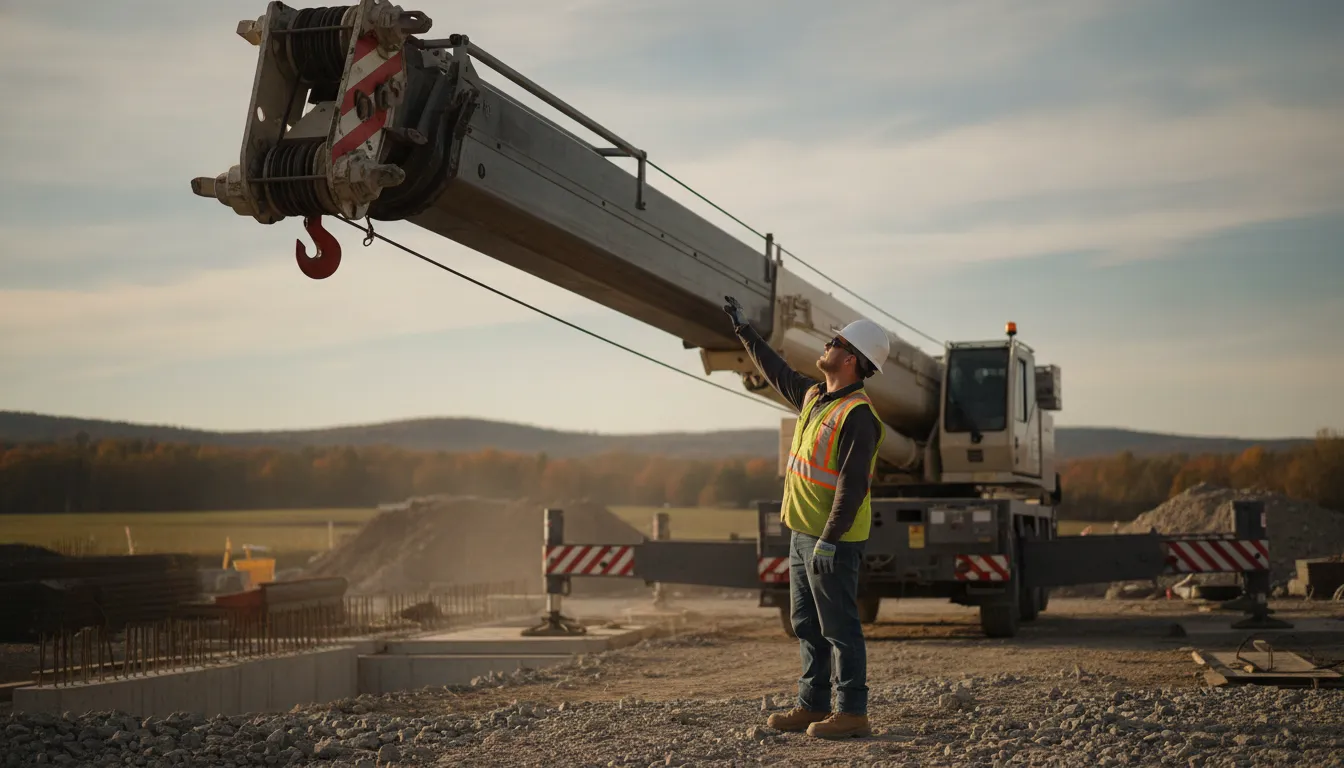
Start with the crane's working parts and their functions. Training should help you identify the boom, wire rope, sheaves, controls, lifting devices, and safety components used in the equipment covered by your course. This practical vocabulary makes it easier to understand operating limits and recognize problems before a lift begins.
Safe operation is equally important. A useful course should address setup, stability, rated capacity, load movement, operating conditions, and the effect of attachments. OSHA requires employers to follow manufacturer procedures applicable to the equipment's operational functions, including use with attachments. The operator should know where to find those procedures and how to apply them on the job. OSHA's mobile crane requirements also state that load charts, recommended operating speeds, hazard warnings, instructions, and the operator's manual must remain readily available in the cab.
Hand signals and inspection procedures deserve focused practice, not a quick review at the end of class. You should be able to recognize standard directions from a signal person, communicate when a signal is unclear, and identify conditions that require stopping work. Inspection preparation should cover the equipment's working parts and the process for documenting or reporting unsafe conditions.
Massachusetts identifies working parts, safe operating practices, hand signals, and inspection procedures as subjects covered by the hoisting engineer examination. Review the current requirements directly through the Massachusetts hoisting licensing and exams information, since state procedures and eligibility details can change.
Renewal planning is a separate part of the path. The current Massachusetts guidance requires four hours of approved continuing education for Class 1B renewal during the renewal period. That education requirement applies to renewal, not to the initial written-exam application. Keep the completion certificate with your renewal records and confirm the current rule before submitting paperwork, because state requirements can change.
Preparation should include both written and practical exam support. MA Hoisting License describes its training as covering written and practical examination preparation, along with safety standards such as OSHA and ANSI. Its crane operator and inspector training category can help you compare available formats. For operators working toward the telescopic crane pathway, the online mobile crane test preparation course is a specific 1B preparation option.
These courses provide preparation support, not a guarantee of state licensure or a substitute for the Massachusetts application and examination process. Confirm the classification and current requirements that apply to your work before enrolling.
Application, Exam, and Renewal Steps to Plan
Once you have identified the Massachusetts classification that matches your work, plan the application and examination as a compliance process, not just a training appointment. The state requirement is straightforward at a high level, but the details of your equipment, operating duties, and current application instructions still need to be checked before you submit anything.
Use this planning sequence
- Confirm the classification before applying. Start with the equipment and functions you expect to perform. For a telescopic mobile crane, review the applicable classification guidance and compare it with your actual work. If the classification is unclear, pause and verify it through current Massachusetts guidance rather than assuming that a familiar equipment label settles the question. The license classifications reference can help you organize that review.
- Read the current state application instructions. Massachusetts requires hoisting engineer license applicants to be at least 18, complete an application, and successfully pass an examination. The exam covers the working parts of hoisting machinery, safe operating practices, hand signals, and inspection procedures. For Class 1B renewal, plan for four hours of approved continuing education during the renewal period and retain the completion record. Use the official Massachusetts hoisting forms and applications page for the current forms and instructions. Do not rely on an old checklist or an informal summary when preparing your submission.
- Prepare for the scope of the exam. Build study time around both equipment knowledge and safe operation. A mobile crane operator should be ready to discuss operating practices, signals, and inspection procedures, not only recognize equipment terminology. For organized preparation resources, review the customer's Test Prep Applications page. Training can support preparation, but it does not replace the state's application or examination requirements.
- Submit, schedule, and keep your records together. After reviewing the current instructions, complete the application carefully and retain copies of what you submitted. Track any confirmation or examination scheduling information in one place. If a question about your circumstances affects eligibility or required paperwork, ask the Massachusetts licensing authority for the controlling answer before proceeding.
- Put renewal on the calendar immediately. Massachusetts hoisting engineer licenses must be renewed every two years. Record the renewal interval when the license is issued, then check the official instructions again as the renewal window approaches. Requirements and forms can change, so a recurring calendar reminder should prompt a fresh review, not an automatic reuse of prior paperwork.
Planning checklist:
- Classification reviewed against the equipment and intended work.
- Current state forms and instructions checked.
- Exam topics included in the study plan.
- Application records and scheduling details saved.
- Two-year renewal reminder added.
For a mobile crane path, this sequence keeps training, application, testing, and renewal connected while leaving official eligibility decisions with the Massachusetts licensing authority.
Safety Checks That Stay With the Operator After Training
Training should change what happens before and during every lift, not just prepare an operator for an exam. A mobile crane operator needs a repeatable way to confirm that the equipment, work area, documentation, and instructions all support the planned operation. The employer's procedures and the manufacturer's requirements remain part of that daily decision-making process.
Keep the manufacturer's procedures available
Before work begins, the operator and supervisor should identify the manufacturer's procedures that apply to the crane's intended functions, including any attachments. OSHA requires the employer to comply with those procedures. If the manufacturer's procedures are unavailable, the employer must develop and enforce the procedures needed for safe operation of the equipment and attachments. See the OSHA mobile crane operating-procedure requirements for the governing language.
This is more than a paperwork check. The operator should know where the manual is stored, which instructions apply to the current configuration, and how the employer communicates changes. A manager can support that process by confirming that current manuals and written procedures are accessible at the jobsite. The crew should use those materials instead of relying on memory or an informal verbal briefing.
Read the load chart before the lift
Rated capacities, or load charts, must be readily available in the crane cab at all times. The cab should also contain recommended operating speeds, special hazard warnings, instructions, and the operator's manual. Use these materials before positioning the crane and again when the lift changes. The operator can check the planned load, radius, boom or attachment configuration, and site conditions against the applicable chart. If any part of the setup does not match the available information, stop and resolve the discrepancy before lifting.
- Operator check: Confirm the correct load chart and manual are in the cab, legible, and applicable to the equipment configuration.
- Operator check: Review rated capacity, operating speed guidance, and hazard warnings for the planned lift.
- Manager check: Make sure procedures are current, accessible, and covered in site-specific briefings.
- Manager check: Require questions or uncertain conditions to be resolved before the crane operates.
Turn safety knowledge into a stop-work habit
A qualified training path can introduce written and practical safety concepts, but safe operation continues through consistent field checks. Operators should speak up when the manual, load chart, or procedure does not address the actual setup. Supervisors should treat that pause as a control, not a delay. The strongest routine is simple: verify the instructions, match the configuration, account for the warnings, and do not proceed until the equipment and plan agree.
How Employers Can Build a Compliant Crane Training Plan
A strong employer plan begins with the work, the equipment, and the people who will operate it. List each mobile crane used by the crew, the tasks it performs, and the operators who need training or renewal. Then confirm the Massachusetts classification and licensing path for each operator through current state guidance. A group course can make training easier to coordinate, but it does not by itself determine licensing eligibility or create an exemption.
Start with an equipment and operator review
For each machine, record the manufacturer, model, attachments, operating functions, and the type of work employees will perform. Match that information to the applicable Massachusetts classification before enrolling the crew. Terminology used on a jobsite is not always the same as the terminology used by the state. So managers should avoid assuming that every crane operator follows the same path. For example, the 1B classification is associated with telescopic crane operators, but the employer should verify the current requirements for each person's duties and equipment.
Next, separate the training plan into individual needs. One operator may need initial preparation, another may need exam preparation, and another may need a biennial renewal. Training should address written and practical examination preparation, safe operating practices, hand signals, inspection procedures, and relevant OSHA and ANSI safety topics. Massachusetts hoisting license applicants must be at least 18 and complete an application. They must also pass an exam covering working parts of hoisting machinery and safe operation. See the Massachusetts license classifications resource when organizing this review.
Choose a delivery format and document completion
Employers can coordinate classroom, online, group, or on-site instruction based on crew schedules, location, and the equipment involved. MA Hoisting License offers group and on-site training support, including OPSI-approved IN-SERVICE / IN-HOUSE training kits. Those kits may support an exemption for certain companies under specific conditions. But the employer must verify whether the conditions apply before treating an operator as exempt from standard licensing requirements. Training support is not a substitute for a state licensing decision.
Keep a practical record for every operator: assigned equipment, course or kit used, dates completed, exam or application status, renewal date, and any site-specific orientation. Store the applicable manufacturer procedures and ensure supervisors know where to find them. A documented plan helps managers identify gaps before an operator is assigned work and gives the company a clear basis for follow-up.
Business Owner Note: You can coordinate group training for your crew at a shared location or jobsite, then verify each operator's Massachusetts requirements individually.
Call 508-212-4735 to discuss your mobile crane training path.
Frequently Asked Questions
What training is required to operate a mobile crane in Massachusetts?
Prepare for the applicable hoisting engineer license exam by studying the machine's working parts, safe operating practices, hand signals, and inspection procedures. Massachusetts also requires applicants to complete an application and pass the exam, so training should address both the written requirements and the equipment-specific operating responsibilities. Review the official Massachusetts licensing and exam guidance before choosing a course.
How do I identify the correct hoisting license classification for mobile crane operation?
Start with the crane's design and the work it will perform, then compare those details with the current Massachusetts classification guidance. A telescopic crane operator may need the 1B classification, but do not assume that the phrase "mobile crane" identifies one license for every machine. Confirm the classification with current state information before applying.
Does my hoisting license cover all types of mobile cranes?
Not necessarily. License classifications are tied to the equipment and operating scope, and the 1B classification specifically covers telescopic crane operators. Check current state requirements for the exact crane, attachments, and duties. Do not rely on a general equipment label or prior license experience.
How often must a Massachusetts hoisting license be renewed?
Massachusetts hoisting engineer licenses must be renewed every two years. Plan renewal before the expiration date and verify the current application and examination instructions with the state, since procedures and requirements can change. Use the official state page as the current reference.
Ready to Plan Your Mobile Crane Training Path?
The right next step depends on the work your mobile crane operation involves and the classification you need to investigate. Call for practical guidance on mobile crane classification, training options, and the application process. Call 508-212-4735 to discuss your questions and determine which current Massachusetts resources to review next.
Tags: ,